
The Trump administration has concluded a large-scale Immigration and Customs Enforcement (ICE) operation in Minnesota. This occurred after more than 4,000 arrests. The operation marks the end of a weeks-long federal enforcement effort. It drew national attention and sparked sharp political debate.
The operation, referred to by federal officials as Operation Metro Surge, focused primarily on the Minneapolis–St. Paul metropolitan area. According to the Department of Homeland Security, the initiative targeted individuals with serious criminal records. This includes convictions for violent offenses. It also includes drug trafficking and repeat immigration violations.
Federal authorities reported that more than 4,000 individuals were arrested during the operation. Officials said agents helped locate 3,364 unaccompanied migrant children. These children had earlier been reported missing after release to sponsors. DHS officials said those recoveries were a major outcome of the operation. They cited coordination between federal agencies and local law enforcement.
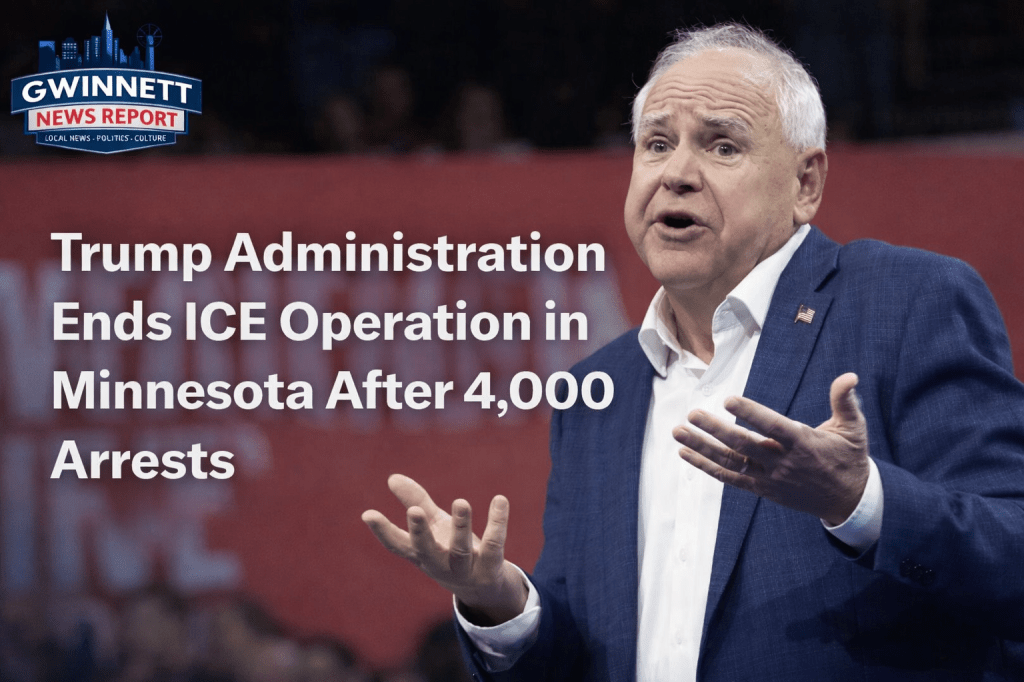
Acting DHS leadership said the operation improved interagency communication. It also led to a temporary increase in federal presence across key neighborhoods. Officials also claimed the enforcement push reduced certain crime indicators during the operation’s peak. Nonetheless, independent verification of those claims has not yet been released.
Despite those assertions, the operation faced significant criticism from state and local leaders. Minnesota Governor Tim Walz and U.S. Senator Amy Klobuchar raised concerns about the scope of the raids. She cited reports of individuals being detained despite having legal immigration status. She also mentioned individuals with no serious criminal history. Civil rights groups also criticized the operation. They claimed enforcement actions caused widespread fear within immigrant communities. These actions also disrupted local businesses.
State officials confirmed that two deaths occurred during the course of enforcement actions, though investigations into the circumstances stay ongoing. Advocacy organizations have called for greater transparency about arrest procedures and detention conditions. They also demand independent oversight of future federal operations.
In response to economic disruptions linked to the raids, Minnesota lawmakers are advocating for $10 million in state relief funding. This funding is aimed at assisting affected families and small businesses. Supporters of the proposal argue that the sudden loss of workers has had lasting impacts on certain sectors. This includes food service, construction, and agriculture. Additionally, the loss of customers has also affected these sectors.
The main enforcement phase has ended. DHS confirmed that hundreds of federal agents will stay in Minnesota. They will continue investigations related to document fraud, human trafficking, and financial crimes within targeted networks. Officials emphasized that these follow-up investigations will be more limited in scope. They will focus on specific cases rather than large-scale sweeps.
The conclusion of Operation Metro Surge highlights the continuing national debate over immigration enforcement, public safety, and federal authority. Immigration policy remains a central issue as we head into future elections. The long-term impact of the Minnesota operation is to persist under scrutiny.
 Gwinnett News Report
Leave a comment